Steam Deck vs ROG Ally vs Legion Go
Steam Deck OLED, ROG Ally X, and Legion Go tested head-to-head. Find out which gaming handheld delivers the best experience in 2026.
Gaming handhelds have gone from "neat toy" to genuine gaming platform in two years. The Steam Deck proved the concept, and now ASUS and Lenovo are fighting for market share with Windows-based alternatives. I spent a month rotating between all three as my primary gaming device. Each one has a genuine argument for being the best.
Specs compared
| Feature | Steam Deck OLED | ROG Ally X | Legion Go |
|---|---|---|---|
| Display | 7.4" OLED 90Hz | 7" IPS 120Hz | 8.8" IPS 144Hz |
| Chip | AMD Custom APU | AMD Z1 Extreme | AMD Z1 Extreme |
| RAM | 16GB LPDDR5 | 24GB LPDDR5X | 16GB LPDDR5X |
| Storage | 512GB/1TB NVMe | 1TB NVMe | 512GB/1TB NVMe |
| Battery | 50Wh | 80Wh | 49.2Wh |
| OS | SteamOS (Linux) | Windows 11 | Windows 11 |
| Weight | 669g | 678g | 854g |
| Price | $549-649 | $800 | $700-750 |
Steam Deck OLED
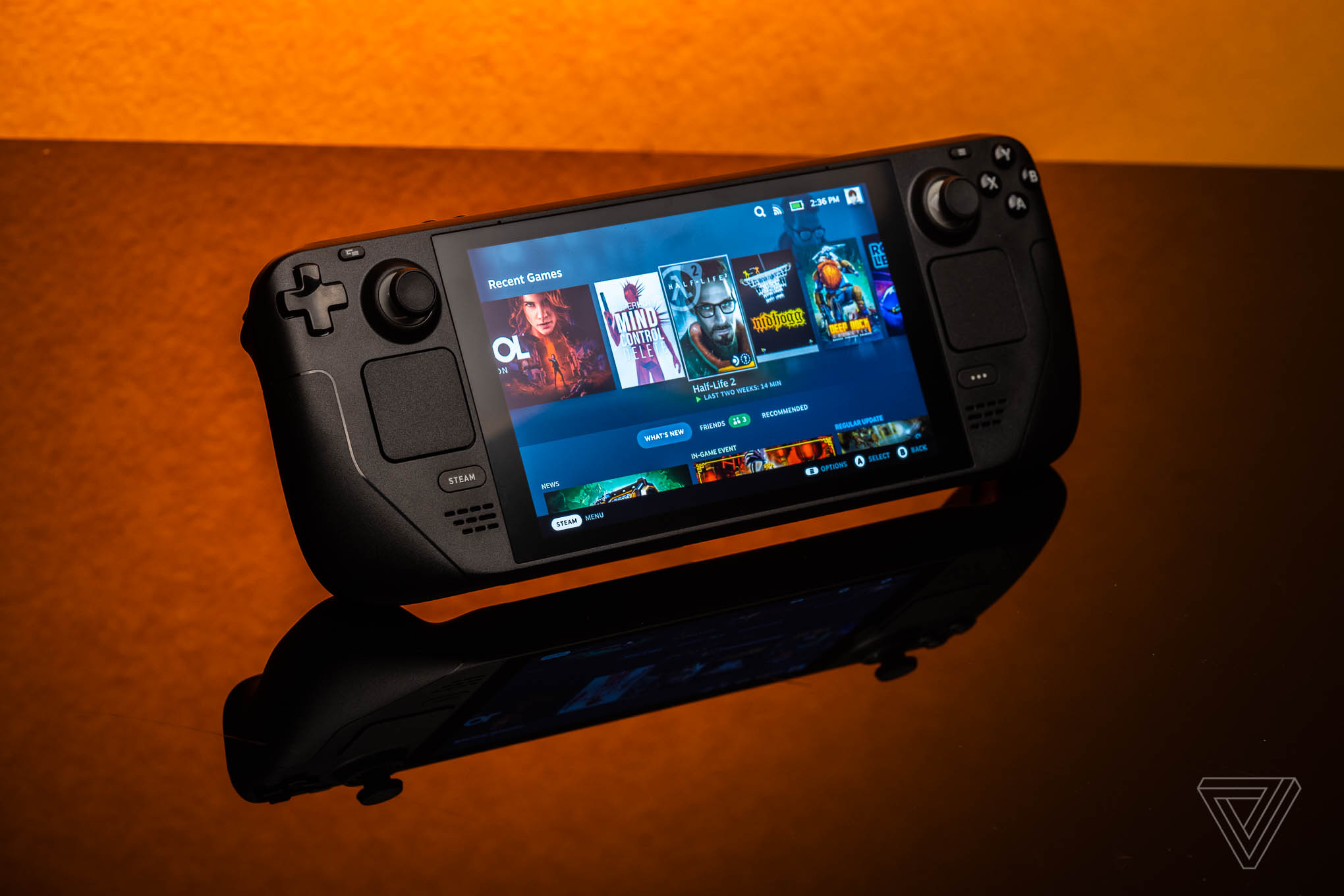
Valve Steam Deck OLED (512GB)
Pros
- OLED display — HDR, perfect blacks, vibrant colors
- SteamOS is purpose-built for handheld gaming
- Best value at $549
- Excellent community with ProtonDB compatibility info
- Battery life improved over LCD version
Cons
- Weaker hardware than Z1 Extreme competitors
- Some Windows games don't work via Proton
- No Game Pass (without workarounds)
- Lower resolution than Legion Go
The Steam Deck OLED remains the handheld I'd recommend to most people. The OLED display makes games look gorgeous — HDR in supported titles, inky blacks in dark scenes, and colors that pop in a way the IPS competitors can't match. Going from the Deck's OLED to the Ally's IPS feels like downgrading a TV.
SteamOS is the secret weapon. It's designed from the ground up for handheld gaming. Quick suspend/resume works flawlessly — close the lid mid-game, open it later, and you're exactly where you left off. The UI makes sense for thumbstick navigation. Power management is optimized. It just feels right in a way that Windows on a handheld doesn't.
The hardware is weaker than the Z1 Extreme in the Ally and Legion Go. In practice, most Steam Deck games run at 30-60fps at the native 800p resolution, which looks sharp on the 7.4-inch screen. You're not running everything at max settings, but the optimized OS and lower resolution make up for a lot.
At $549, it's $150-250 cheaper than the competition. That alone earns it the top spot.
ASUS ROG Ally X
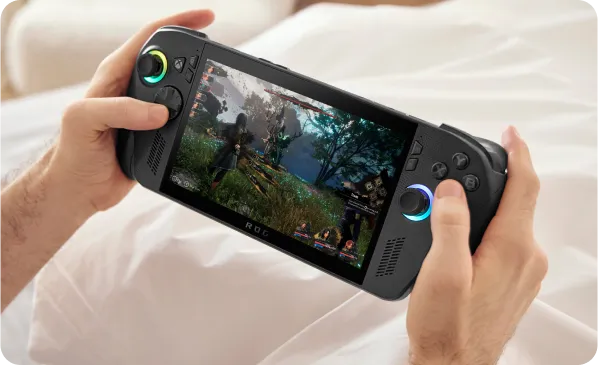
ASUS ROG Ally X
Pros
- More powerful Z1 Extreme handles demanding games
- 80Wh battery — longest battery life of the three
- 24GB RAM handles Windows multitasking
- Full Windows 11 — play anything, any launcher
- 120Hz IPS display is smooth
Cons
- $800 is expensive
- Windows is clunky on a handheld
- Fan noise is louder than Steam Deck
- No OLED display
The ROG Ally X is the performance king. The Z1 Extreme with 24GB of RAM runs demanding games at higher settings than the Steam Deck can manage. Cyberpunk 2077, Starfield, and Alan Wake 2 all ran noticeably smoother on the Ally X, especially with FSR enabled.
The 80Wh battery is the largest in any gaming handheld. I consistently got 2-3 hours of heavy gaming (compared to 1.5-2 hours on the Steam Deck and Legion Go). For lighter games, 4-5 hours is achievable.
Windows 11 is both the Ally's biggest advantage and biggest frustration. You can play anything — Steam, Epic, Game Pass, Battle.net, emulators, whatever. But Windows wasn't designed for thumbstick navigation, and it shows. Pop-ups, Windows Update prompts, and desktop mode intrusions break the handheld illusion regularly.
Lenovo Legion Go
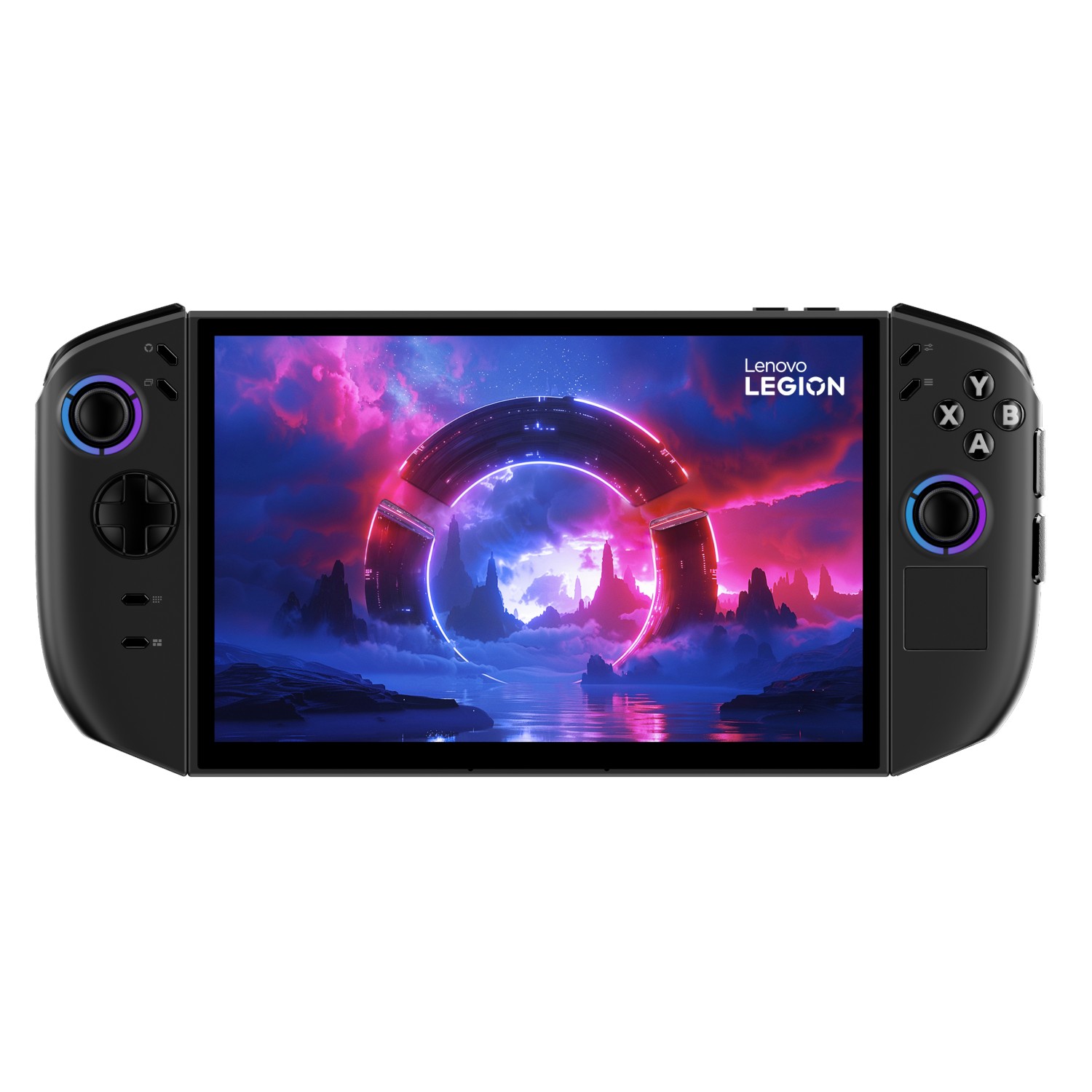
Lenovo Legion Go
Pros
- 8.8-inch display — biggest screen of the three
- Detachable controllers for tabletop mode
- 144Hz refresh rate
- FPS mode turns one controller into a mouse
- Kickstand for propped-up play
Cons
- Heavy at 854g with controllers
- Battery life is the worst — 1.5-2 hours
- Detachable controllers have slight wobble when attached
- Windows-based with the same issues as Ally
The Legion Go takes a different approach: a bigger screen and detachable controllers that let you play in tabletop mode like a mini Switch. The 8.8-inch 1600p 144Hz display is the best spec sheet on this list, and games do look more immersive on the larger screen.
The detachable controllers are the unique selling point. Pop them off, prop up the kickstand, and play from a distance — on a plane tray table, on a hotel nightstand, wherever. One controller can switch to FPS mode, functioning as an air mouse for first-person shooters. It's a creative idea that works better than expected.
The trade-off is weight and battery. At 854g with controllers attached, the Legion Go is noticeably heavier than the others. My arms get tired after about 45 minutes of held play. Battery life at 1.5-2 hours of heavy gaming is the worst here — you'll want to keep a charger handy.
Game compatibility
Steam Deck: About 80% of the Steam library works via Proton, with more games getting verified weekly. Non-Steam games require workarounds. No native Game Pass.
ROG Ally X / Legion Go: Anything that runs on Windows runs here. Steam, Epic, Game Pass, GOG, emulators — no compatibility concerns. The catch is dealing with Windows.
If Xbox Game Pass is important to you, that's a point for Windows. If you mostly play Steam games, SteamOS is the better experience.
Build quality and comfort
The Steam Deck feels the best in hand. The ergonomic grip, balanced weight distribution, and trackpads (unique to the Deck) make long sessions comfortable. The ROG Ally X is similar but slightly less ergonomic. The Legion Go is too heavy for extended handheld play without fatigue.
What to buy
Best overall experience: Steam Deck OLED ($549) — the OLED screen, SteamOS polish, and $549 price make it the easy recommendation.
Maximum performance and versatility: ROG Ally X ($800) — if you want to play anything on any launcher at the highest settings, and battery life matters.
Biggest screen and unique features: Legion Go ($700) — if tabletop mode appeals to you and you don't mind the weight.
I own a Steam Deck OLED and it's the one I reach for. The OLED display combined with SteamOS's seamless handheld experience wins over raw performance for me. But I understand the appeal of Game Pass and full Windows compatibility.
As an Amazon Associate, we earn from qualifying purchases. This doesn't affect our recommendations or editorial independence.