Best 4K TVs Under $1000 in 2026
The best 4K TVs you can buy for under $1000 in 2026. We compare models from TCL, Hisense, Samsung, LG, and Sony to find the best value.
I've spent the last two months living with five TVs in my apartment. My girlfriend is thrilled. Two in the living room, one in the bedroom, two more in the office on stands like some kind of unhinged Best Buy showroom. But that's what it takes to figure out which sub-$1,000 TV is actually worth your money in 2026.
The good news: a thousand bucks goes a lot further than it used to. You can get mini-LED backlighting, proper HDR, 120Hz panels, and even OLED at this price point now. The bad news is that with so many options, it's easy to pick the wrong one and end up with a TV that looks washed out in your living room or blooms like crazy in dark scenes.
I watched the same handful of test scenes on every TV here. The opening of Blade Runner 2049 for dark scenes and HDR highlights. A Premier League match on a Saturday afternoon with the curtains open. A few hours of Baldur's Gate 3 to test gaming response. And enough Netflix to make my "continue watching" list embarrassing. Here's what I found.
Our top picks at a glance
| TV | Size | Panel Type | HDR Peak Brightness | Price |
|---|---|---|---|---|
| TCL QM7 | 65in | Mini-LED QLED | ~2,400 nits | $699 |
| Hisense U8N | 65in | Mini-LED QLED | ~3,000 nits | $898 |
| Samsung QN85D | 65in | Neo QLED Mini-LED | ~1,500 nits | $898 |
| LG C4 OLED | 55in | OLED evo | ~800 nits | $897 |
| Sony X90L | 65in | Full Array LED | ~1,100 nits | $798 |
Best overall: TCL 65" QM7
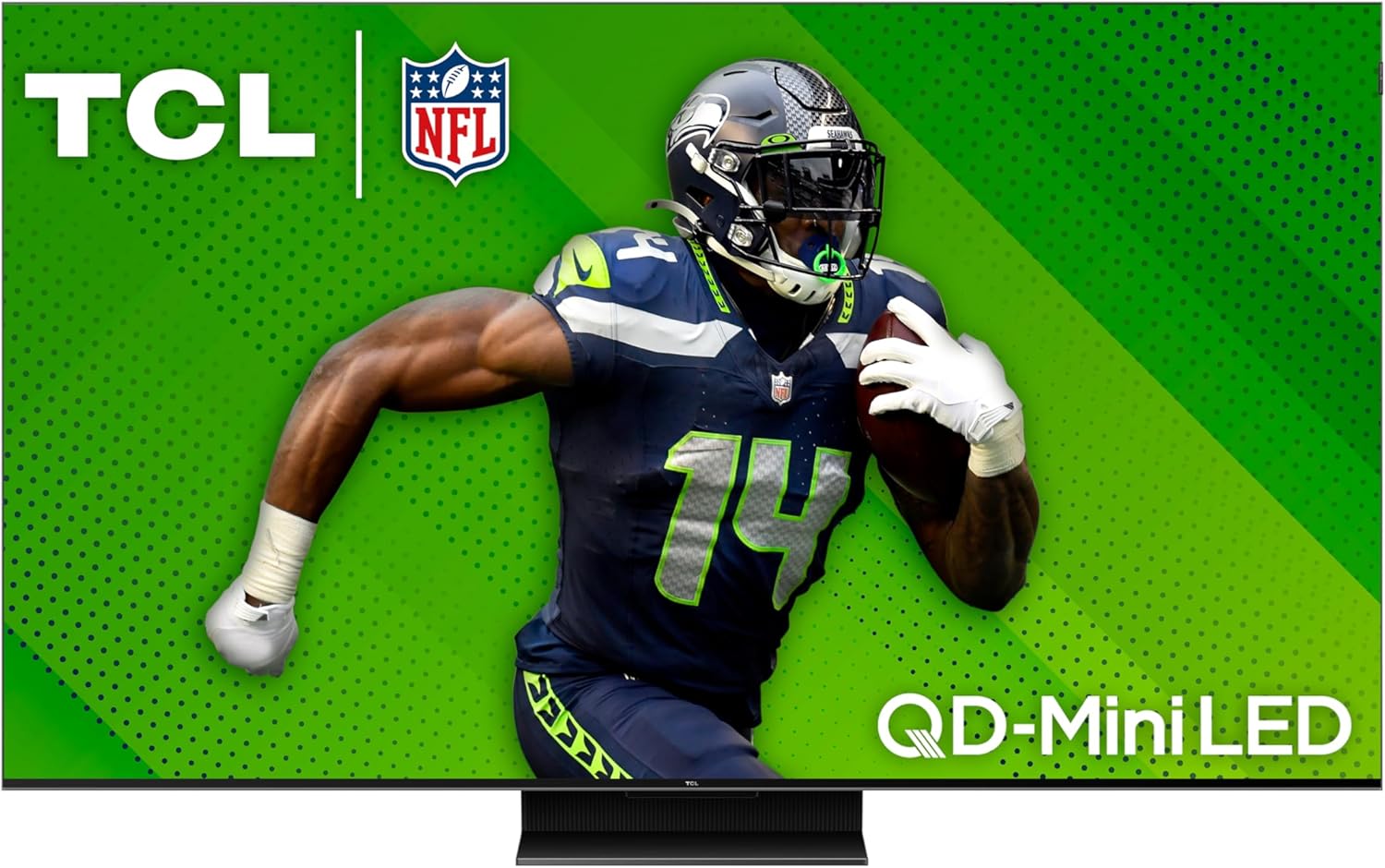
TCL 65-inch QM7 (65QM751G)
Pros
- Over 1,500 local dimming zones for a sub-$700 TV
- Around 2,400 nits peak brightness is absurd at this price
- Dolby Vision IQ and HDR10+ support
- Game Accelerator up to 240Hz VRR
- Built-in Onkyo speakers sound better than they should
Cons
- Google TV interface has some lag
- Viewing angles are average for an LCD
- Black uniformity could be better in very dark scenes
This is the TV I keep coming back to. At around $700 for a 65-inch mini-LED set with over 1,500 dimming zones, the TCL QM7 is the kind of thing that would have cost three times as much a few years ago.
What struck me first was brightness. This thing gets properly bright. Watching the Blade Runner 2049 opening, the spinner's lights cut through the darkness with real intensity while the surrounding blacks stayed reasonably inky. The mini-LED zone count means blooming is there if you look for it, but in normal viewing you rarely notice. I've reviewed TVs at four times this price that had worse blooming.
Color is solid too. The quantum dot layer gives you wide color gamut coverage, and skin tones look natural out of the box. I did bump the color temperature down a notch from the default, which runs a hair warm, but that's personal preference.
For gaming, you get a 120Hz native panel with VRR up to 240Hz. Input lag was low enough that I never felt behind in online games. The Game Accelerator mode dials in the right settings automatically when it detects a console.
The Onkyo speaker system surprised me. There's an actual built-in subwoofer that gives dialogue some body and explosions a bit of rumble. Most TVs at this price sound like tin cans. This one doesn't.
Where it falls short: the Google TV interface occasionally stutters, and if you're sitting way off to the side, colors shift more than on an OLED panel. But for straight-on viewing, I have a hard time recommending anything else at this price.
Best for bright rooms: Hisense 65" U8N
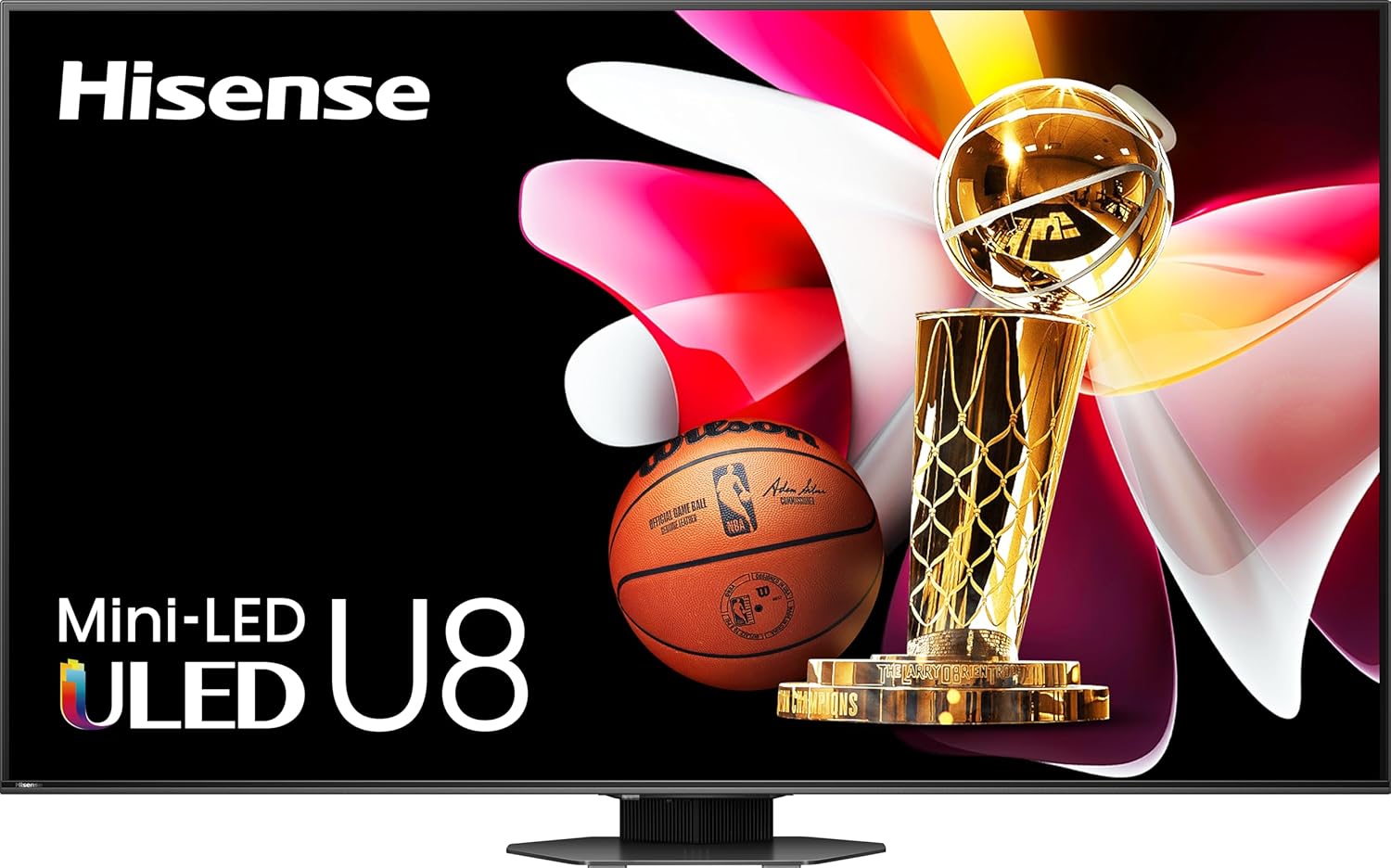
Hisense 65-inch U8N (65U8N)
Pros
- Up to 3,000 nits peak brightness just torches any room glare
- Doubled local dimming zones vs. prior year
- Anti-glare low reflection panel works great in sunny rooms
- 144Hz native panel with FreeSync Premium Pro
- Two-year warranty is double the industry standard
Cons
- Default picture settings are way too aggressive
- Smart TV ads in the home screen are annoying
- Some shadow detail gets crushed in filmmaker mode
If your living room gets a lot of natural light, stop reading and buy this TV. The Hisense U8N hits around 3,000 nits of peak brightness, which is frankly absurd. I put it in my office, which has a south-facing window, and it punched through afternoon sun like it wasn't there. Every other TV on this list looked a bit faded in that room. The U8N didn't flinch.
The anti-glare coating on the panel is part of the story. Where some TVs fight reflections by getting bright, Hisense does both: gets very bright AND cuts reflections. The result is that in a bright room, this TV looks better than sets costing twice as much.
But you need to tune it. Out of the box, the picture settings are cranked to maximum everything. Colors are blown out, motion smoothing is on, and the AI picture processing is doing too much. Spend 15 minutes dialing it back and you'll be rewarded with a genuinely impressive picture. I landed on the Filmmaker mode with brightness bumped up and the local dimming set to medium.
The local dimming zones have been roughly doubled compared to last year's U8K, and you can tell. Specular highlights pop against dark backgrounds with less blooming than I expected. It's not at TCL QM8 levels, but it's close.
Gaming performance is strong. The 144Hz panel with FreeSync Premium Pro means it plays nicely with both PS5 and Xbox Series X. Dolby Vision gaming is supported too. Input lag was low enough that I couldn't tell the difference between this and a gaming monitor.
One genuine annoyance: Hisense puts ads in the Google TV home screen. You can mostly avoid them by jumping straight to your apps, but they're there, and they feel tacky on a TV you just paid good money for.
Best Samsung: Samsung 65" QN85D
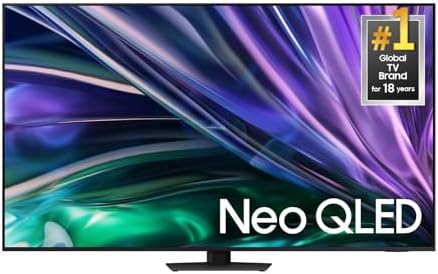
Samsung 65-inch QN85D (QN65QN85D)
Pros
- Samsung's Neo QLED mini-LED looks clean and refined
- Excellent upscaling of 720p and 1080p content
- Object Tracking Sound Lite creates convincing spatial audio
- Gaming Hub is genuinely useful for cloud gaming
- Thin, premium build quality
Cons
- Not as bright as TCL or Hisense competitors
- No Dolby Vision support (Samsung uses HDR10+ only)
- Tizen OS feels locked down compared to Google TV
Samsung does picture processing better than anyone else in this price range. The QN85D won't hit the same brightness peaks as the Hisense U8N or the same zone count as the TCL QM7, but the overall image has a polish to it that's hard to describe. It just looks "right."
Where this really shows is with lower-quality content. Watching older 720p shows on Netflix or standard cable TV, the Samsung upscaler does its thing and makes everything look sharper and more detailed than it has any right to. The other TVs on this list handle 4K content beautifully but stumble a bit with poor source material. The QN85D doesn't.
The big downside: no Dolby Vision. Samsung has dug in on HDR10+ and shows no signs of adding DV support. If your streaming library is heavy on Dolby Vision content, that's worth knowing. In practice, HDR10+ looks great on this set, and the difference between the two formats is smaller than the internet debates suggest. But it's still a missing feature at this price.
Build quality is premium. Thin bezels, flat back panel, sturdy stand. It looks like a TV that costs more than it does.
The Tizen operating system is fine. It's fast, it has all the major apps, and Samsung's Gaming Hub lets you stream games from Xbox Cloud Gaming and GeForce Now without a console. But Tizen feels more locked down than Google TV, and Samsung's own services are pushed front and center.
Best OLED value: LG 55" C4 OLED
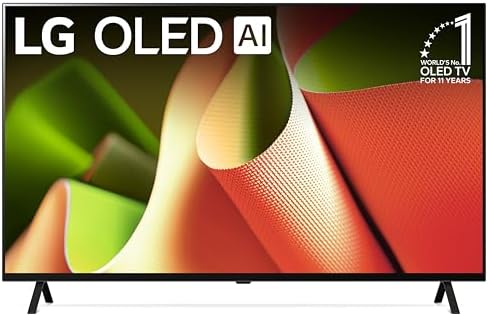
LG 55-inch C4 OLED (OLED55C4PUA)
Pros
- True OLED blacks that no LED TV can match
- Perfect viewing angles for wide seating arrangements
- 144Hz with NVIDIA G-Sync and AMD FreeSync
- 0.1ms response time is unbeatable for gaming
- Dolby Vision and Dolby Atmos support
Cons
- Only 55 inches at this price (65-inch is over $1,000)
- Can't compete with LED TVs in peak brightness
- Some risk of burn-in with static content
- Gets expensive if you need a bigger size
Here's the thing about OLED: once you see it, it's hard to go back. The LG C4 does things with contrast that no mini-LED TV on this list can touch. Black is actually black, not "very dark grey." In that Blade Runner test scene, the difference was stark. The spinners' lights existed in true darkness, not floating in a faintly glowing haze.
The trade-off is size and brightness. At under $1,000 you're looking at the 55-inch model, while every other TV here gives you 65 inches. For a lot of living rooms, 55 inches is perfectly fine. But if you're sitting 8 to 10 feet away, you'll notice the difference.
Brightness is the other concession. The C4 peaks around 800 nits, which is less than half what the Hisense U8N puts out. In a dim room, this doesn't matter at all; the OLED still looks better because of its infinite contrast ratio. But in a bright room with lots of windows, the LED TVs will look punchier.
For gaming, the C4 is the best TV on this list. The 0.1ms response time and 144Hz panel with G-Sync and FreeSync mean zero motion blur and no tearing. Playing fast-paced games on this panel feels noticeably crisper than on any of the LED options, and input lag is basically negligible.
The webOS platform is clean and has all the apps you need. LG's Magic Remote with its point-and-click cursor is either something you love or hate; I find it faster than traditional remotes.
If you watch mostly in a dim room and care more about picture quality than size, the C4 is the pick. I keep it in my bedroom and it's the TV I enjoy watching the most.
Best from Sony: Sony 65" X90L
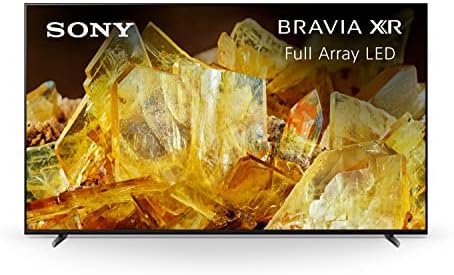
Sony 65-inch X90L (XR65X90L)
Pros
- Sony's Cognitive Processor XR delivers the most natural-looking picture
- Best motion handling of any TV in this group
- Excellent color accuracy with minimal calibration
- Great PS5 integration with exclusive features
- Full Array LED with good local dimming
Cons
- Lower peak brightness than mini-LED competitors
- Fewer dimming zones means more visible blooming
- 2023 model so it's older tech
- Google TV can be sluggish on this hardware
Sony TVs have a look. If you put all five of these TVs side by side playing the same content, the Sony is the one that looks most like real life. Colors are precise without being overdone. Motion is handled smoothly without the soap opera effect. Skin tones are exactly right. It's the TV a cinematographer would pick.
The X90L is a 2023 model, which is actually great for buyers right now because it means steep discounts. At around $798, it's the cheapest TV on this list and arguably the best value if you prioritize accuracy over raw brightness.
The Cognitive Processor XR is Sony's secret weapon. It analyzes the image the way a human eye does, focusing processing power on the areas where you're actually looking. Other TVs might be brighter or have deeper blacks, but the Sony has this cohesive quality that's hard to put into words.
Motion handling is superb. Watching Premier League matches, the ball stayed sharp and players didn't ghost or judder. If you watch a lot of live sports, this matters more than you might think.
For PS5 owners, you get exclusive features like Auto HDR Tone Mapping and Auto Genre Picture Mode. Nice perks if you're in the Sony ecosystem.
The downsides: as a full array LED rather than mini-LED, it has fewer dimming zones than the TCL or Hisense, so you'll see more blooming in dark scenes. And the Google TV implementation on this older hardware can be slow when launching apps.
How we tested
Every TV spent at least two weeks in my home. I tested each one in two different rooms: a bright living room with two large windows, and a dim bedroom with blackout curtains.
Here's what I measured and watched:
- Brightness: Peak brightness in HDR using 10% and full-screen white windows
- Black levels: How dark the screen gets in dark scenes and how much blooming appears around bright objects
- Color accuracy: Out-of-box accuracy and after basic calibration using a colorimeter
- Motion handling: Premier League footage, fast-paced gaming, and camera pans in movies
- Gaming performance: Input lag, VRR behavior, and response times using both PS5 and a gaming PC
- Viewing angles: Color and contrast shift at 30 and 45 degrees off-center
- Smart TV platform: Speed, app availability, and general usability
- Sound quality: Because some people really do use the built-in speakers
I also watched at least 10 hours of normal content on each set, because test patterns only tell part of the story.
Who should buy what
You watch in a bright room with lots of windows: Get the Hisense U8N. Nothing else here fights glare as well.
You want the most TV for the least money: The TCL QM7 at $699 is genuinely hard to beat. It does everything well and nothing badly.
You care about color accuracy and want Sony's processing: The Sony X90L at $798 is a bargain. It won't win a brightness contest but the picture quality is refined in a way that's hard to replicate.
You want the best picture quality, period, and watch in a dim room: The LG C4 OLED. Those infinite blacks and perfect viewing angles make everything else look a little washed out once you've experienced it.
You want the best all-around Samsung experience: The QN85D has the best upscaling, a polished design, and Samsung's gaming features. Just know you're giving up Dolby Vision.
You're a serious gamer: The LG C4 for its 0.1ms response time. If you need a bigger screen, the TCL QM7 or Hisense U8N both perform well at 120Hz+ with VRR.
You watch a lot of sports: The Sony X90L handles motion better than anything else on this list.
All five of these TVs are good. But "good" means different things depending on your room, your content, and what bothers your eyes. Pick the one that matches how you actually watch, not the one with the biggest spec sheet number.
As an Amazon Associate, we earn from qualifying purchases. This doesn't affect our recommendations or editorial independence.