Best Budget Projectors Under $300
The best projectors under $300 for movies, gaming, and backyard screenings. We tested affordable 1080p and 4K options to find real value.
You can get a genuinely good projector for under $300 in 2026. Not "good for the price" with an asterisk — actually good. Native 1080p with decent brightness, reasonable color accuracy, and smart features that used to be reserved for $800+ models. The catch is knowing which ones deliver and which ones lie about their specs.
I set up five projectors in the same room, projected onto the same 100-inch screen, and compared them in daylight, evening, and full darkness.
Quick comparison
| Projector | Resolution | Brightness | Throw Ratio | Price |
|---|---|---|---|---|
| XGIMI MoGo 3 Pro | 1080p | 450 ANSI lumens | 1.2:1 | $300 |
| BenQ TH575 | 1080p | 3,800 ANSI lumens | 1.15:1 | $280 |
| Epson EF-11 | 1080p | 1,000 ANSI lumens | 1.0:1 | $250 |
| Nebula Capsule 3 | 1080p | 300 ANSI lumens | 1.0:1 | $250 |
| VANKYO V600 Pro | 1080p | 280 ANSI lumens | 1.36:1 | $130 |
XGIMI MoGo 3 Pro
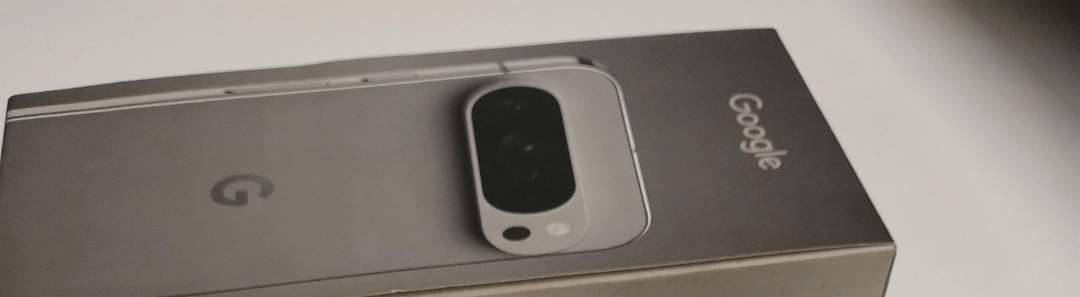
XGIMI MoGo 3 Pro
Pros
- Built-in Google TV with apps
- Auto keystone and focus — set it down anywhere
- Decent sound from built-in Harman Kardon speakers
- Compact and portable
- Auto screen alignment is magic
Cons
- 450 ANSI lumens — needs a dark room for best results
- Not bright enough for daytime viewing
- Fan noise is audible in quiet scenes
- Color accuracy trails dedicated home theater projectors
The MoGo 3 Pro is the best all-around budget projector because it eliminates the setup headaches that make cheap projectors frustrating. Automatic keystone correction, auto focus, and auto screen alignment mean you set it on a table and it figures out the rest. I literally placed it on a stack of books aimed roughly at a wall and had a perfectly aligned 80-inch image in about 10 seconds.
Built-in Google TV means Netflix, Disney+, YouTube, and everything else without connecting a streaming stick. The Harman Kardon speakers are surprisingly decent — not home theater quality, but adequate for a bedroom or small living room.
The brightness limitation is real. In a dark room, the image is vibrant and sharp. With ambient light — curtains partially open, a lamp on in the corner — the image washes out noticeably. This is a nighttime projector.
BenQ TH575
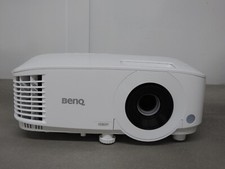
BenQ TH575
Pros
- 3,800 ANSI lumens — usable in ambient light
- 16ms input lag at 1080p — great for gaming
- 120Hz refresh rate
- Bright enough for 100+ inch screen
- Proven BenQ reliability
Cons
- No smart TV built in — needs external stick
- Fan is loud
- Large and not portable
- Manual focus and keystone only
The BenQ TH575 takes the opposite approach to the XGIMI — maximum brightness at the expense of portability and smart features. 3,800 ANSI lumens is bright enough to use with lights on and curtains open. That's a massive practical advantage if your projector lives in a living room rather than a dedicated theater space.
For gaming, the 16ms input lag at 1080p/120Hz is competitive with budget TVs. I played Elden Ring on a 120-inch projected image and the responsiveness was fine — not monitor-fast, but no perceptible delay.
The trade-off: it's a traditional lamp projector. Big, loud fan, needs a streaming stick for apps, and manual setup. Not something you'll carry to a friend's house.
Epson EF-11
Epson EF-11
Pros
- Laser light source — 20,000 hour lifespan
- 1,000 lumens in a portable package
- USB-C input for laptops
- Full 1080p native resolution
- Nearly instant on/off — no warm-up time
Cons
- No built-in apps or smart features
- 1,000 lumens still struggles in daylight
- No battery — needs wall power
- Single HDMI port
The EF-11 uses a laser light source instead of a traditional lamp, which means it'll last 20,000 hours before replacement. At two hours a day, that's 27 years. Laser also means instant on/off — no waiting for a lamp to warm up or cool down.
1,000 lumens splits the difference between the dim XGIMI and the bright BenQ. It's usable with some ambient light but not in a sunny room. Image quality is clean and sharp at 1080p, with good color accuracy for an Epson.
No smart features means you'll need to connect a Fire Stick, Chromecast, or laptop. The USB-C input is handy for direct laptop connections.
Nebula Capsule 3
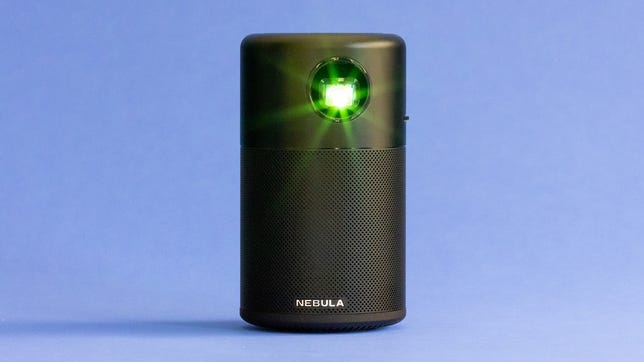
Anker Nebula Capsule 3
Pros
- Soda-can size — truly portable
- Built-in battery for 2.5 hours of use
- Google TV built in
- Auto keystone and focus
- 8W speaker is decent for the size
Cons
- 300 lumens — dark room required
- Small projected image looks best
- Battery doesn't last through a full movie at max brightness
- Resolution looks soft on screens over 80 inches
The Capsule 3 is the ultimate portable projector. It's the size of a soda can, has a built-in battery, and runs Google TV. Toss it in a backpack, point it at any white surface, and you have a movie screen. I've used it in hotel rooms, campsites, and on a friend's garage wall.
At 300 lumens, it needs near-total darkness. The image is sharp at 60-80 inches but gets soft beyond that. Battery lasts about 2 hours at reasonable brightness — enough for most movies if you dim slightly.
VANKYO V600 Pro
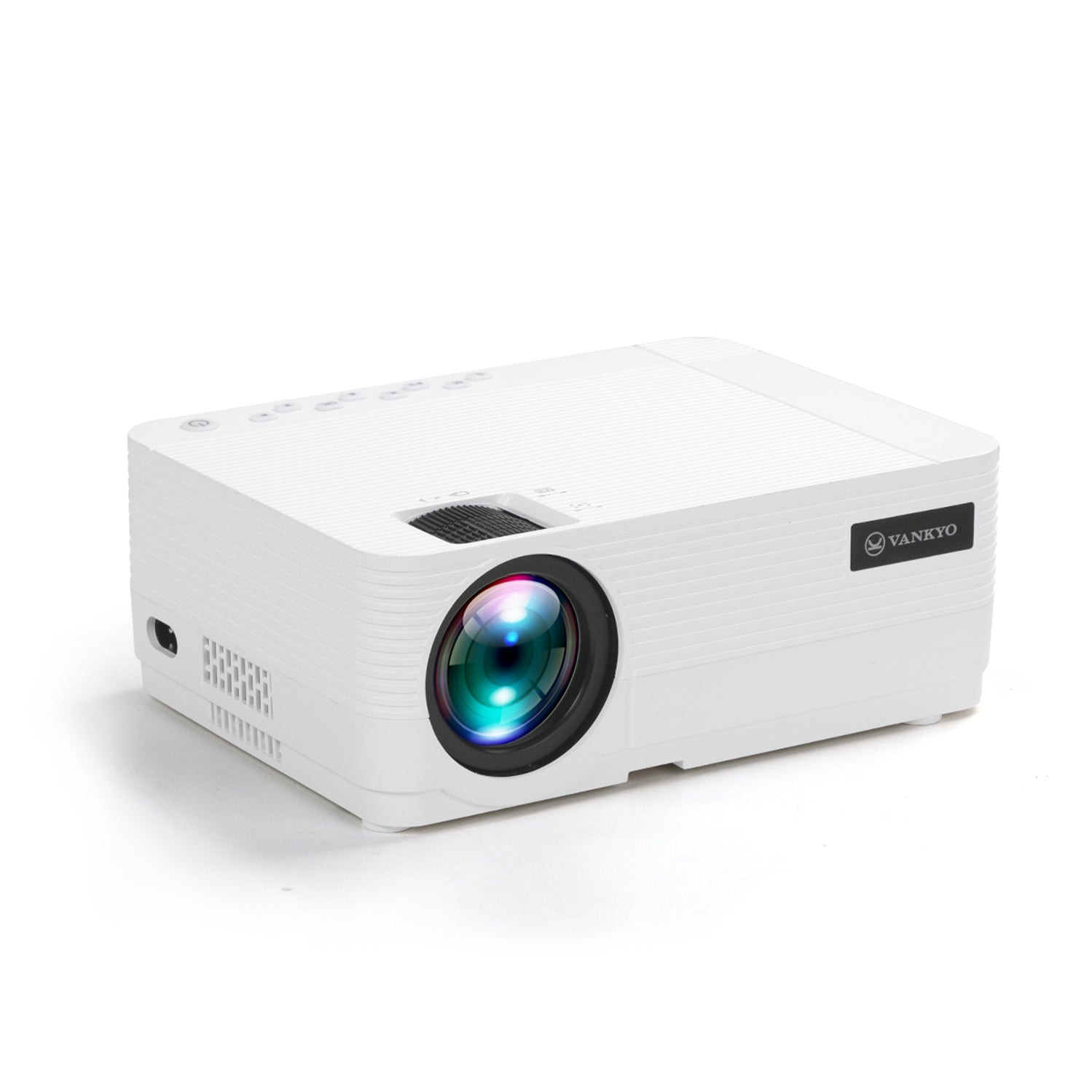
VANKYO V600 Pro
Pros
- $130 is incredibly cheap
- Dual HDMI inputs
- Comes with a carrying bag
- Acceptable image quality in complete darkness
- Built-in speakers
Cons
- 280 lumens is very dim
- Fan is loud
- Resolution looks soft despite 1080p claims
- Color accuracy is poor
- Build quality is disposable
At $130, set expectations accordingly. The V600 Pro produces a watchable image in a dark room for movie nights, backyard screenings, and kids' sleepovers. It won't look like a TV, and the colors lean slightly green. But for occasional use at this price, it does the job.
I wouldn't recommend this as your primary display. Think of it as a $130 entertainment purchase for specific situations — outdoor movie nights, camping, temporary setups.
The takeaway
Spend $250-300 for a projector you'll actually enjoy using. Below that, compromises start stacking up. The XGIMI MoGo 3 Pro for portability and smart features, or the BenQ TH575 if brightness and gaming matter most.
As an Amazon Associate, we earn from qualifying purchases. This doesn't affect our recommendations or editorial independence.