Best Budget Smartphones 2026
The best budget phones under $500 in 2026. We compare the Pixel 9a, Samsung A56, Nothing Phone 3a, OnePlus 13R, and Motorola Edge 2026.
I've been testing budget phones for the better part of six months now, and 2026 is a weird inflection point. The sub-$500 category has gotten so good that I genuinely struggle to recommend flagships to most people. The cameras are 90% as capable, the displays are fantastic, and battery life is often better because these phones aren't pushing bleeding-edge power-hungry chips. If you're spending under $500 on a phone, you're not settling anymore. You're being smart.
Here are the five phones that earned spots after weeks of daily use, swapping SIM cards, running benchmarks, and taking way too many photos of my dog.
Our top picks at a glance
| Phone | Display | Camera | Battery | Price |
|---|---|---|---|---|
| Google Pixel 9a | 6.3" OLED 120Hz | 48MP main + 13MP ultrawide | 5,100mAh | $499 |
| Samsung Galaxy A56 | 6.7" Super AMOLED 120Hz | 50MP main + 12MP UW + 5MP macro | 5,000mAh | $499 |
| Nothing Phone 3a | 6.77" AMOLED 120Hz | 50MP main + 50MP 2x tele + 8MP UW | 5,000mAh | $379 |
| OnePlus 13R | 6.78" ProXDR 120Hz | 50MP main + 50MP 2x tele + 8MP UW | 6,000mAh | $600 |
| Motorola Edge 2025 | 6.7" pOLED 120Hz | 50MP main + 50MP UW + 10MP tele | 5,200mAh | $550 |
Google Pixel 9a: the camera king on a budget
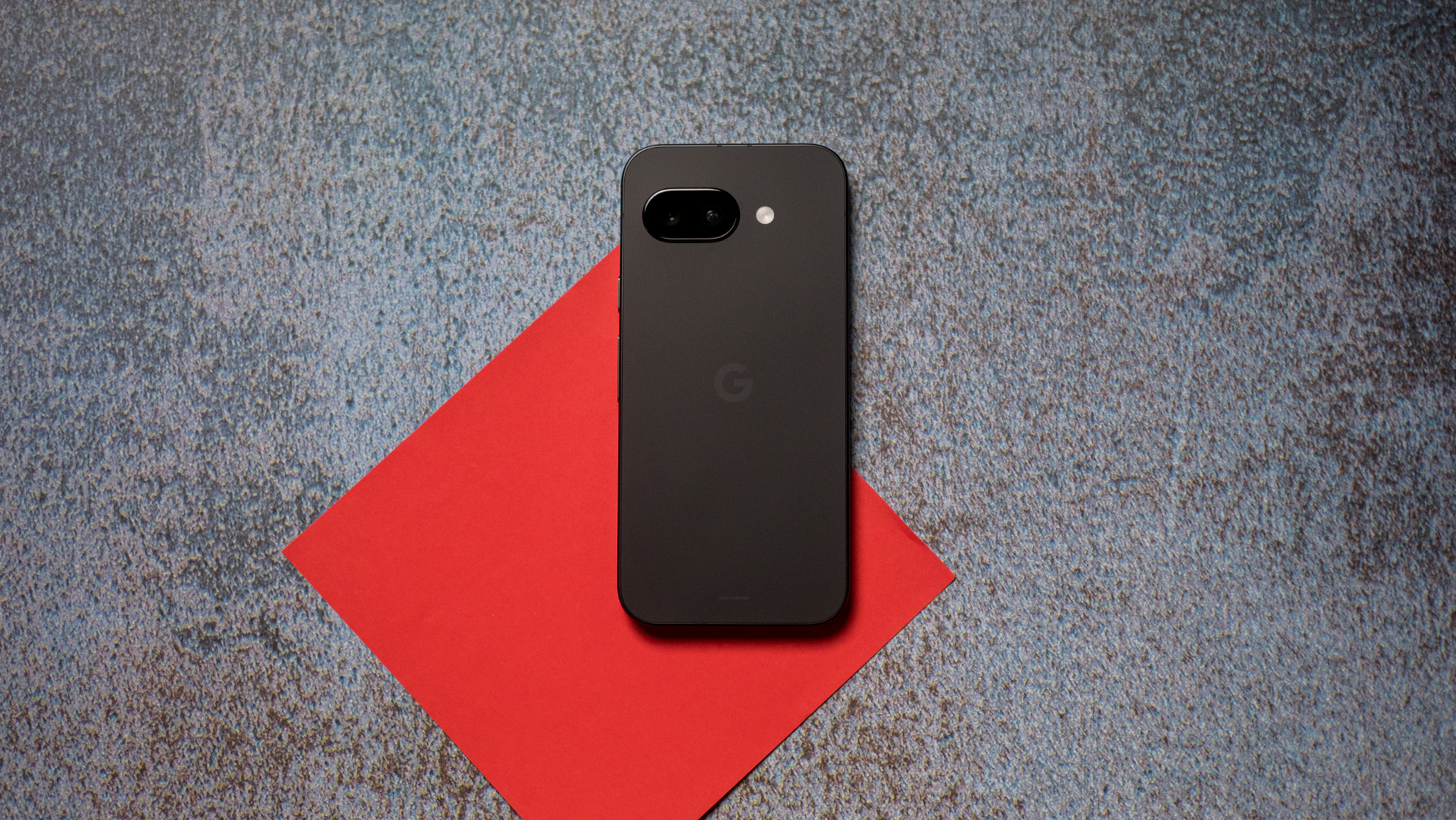
Google Pixel 9a
Pros
- Best camera processing in this price range, period
- Tensor G4 means 7 years of OS and security updates
- IP68 water resistance -- a first for the A-series
- Google AI features like Magic Eraser and Circle to Search
- 5,100mAh battery lasts well over a day
Cons
- 48MP sensor is lower resolution than competitors
- No telephoto lens -- you're stuck with digital zoom past 1x
- 8GB RAM feels tight when multitasking heavily
- Design is functional but boring compared to Nothing
Google's Pixel A-series has been the default recommendation in this price range for years, and the 9a doesn't change that. It changes the conversation.
The 48MP main sensor is technically a downgrade from the 64MP on the Pixel 8a, but megapixel count stopped mattering years ago. What matters is what Google's Tensor G4 chip does with the data, and the answer is: witchcraft. Night Sight produces photos that look like they came from a phone twice the price. The computational photography is so far ahead of Samsung, Nothing, and everyone else at this tier that it's almost unfair. I took a photo of my kitchen at 11pm with terrible overhead lighting, and the Pixel 9a made it look like a magazine spread. The Galaxy A56 made it look like a crime scene.
The new 5,100mAh battery is a welcome upgrade. I consistently got through a full day of heavy use with 30-40% remaining. The Pixel's adaptive battery management has gotten smarter too -- it learns your usage patterns and throttles background apps aggressively, which some people might find annoying but I find practical.
Where the Pixel 9a falters is versatility. There's no telephoto lens, so anything beyond 2x zoom is digital and it shows. The 8GB of RAM is fine for most tasks but I noticed occasional stutters when switching between six or seven apps. And the design is plain. It's a rectangle with rounded corners and nothing else. Functional? Yes. Exciting? No.
But if camera quality is your top priority and you're spending under $500, this is the phone. Nothing else comes close.
Samsung Galaxy A56: the reliable all-rounder

Samsung Galaxy A56 5G
Pros
- 6.7-inch Super AMOLED display is gorgeous
- IP67 water and dust resistance
- 6 years of OS updates from Samsung
- 45W fast charging -- a big upgrade over the A55
- One UI 7 is polished and feature-rich
Cons
- Exynos 1580 chip lags behind Snapdragon competitors in raw speed
- Camera processing can't match the Pixel 9a
- 5MP macro camera is basically useless
- No charger in the box despite advertising 45W charging
Samsung's Galaxy A series has been the world's best-selling smartphone line for years, and it's easy to see why. The A56 does everything competently and nothing terribly. It is the Honda Civic of smartphones.
That 6.7-inch Super AMOLED panel is the star. It hits 1,900 nits peak brightness, which means you can actually read your screen at the beach, and the 120Hz refresh rate makes scrolling feel buttery. Colors are punchy without being cartoonish, and Samsung's Vision Booster automatically adjusts contrast in bright sunlight. After weeks of comparing displays, the A56's screen is my favorite in this lineup. The Pixel 9a's 6.3-inch OLED is great but noticeably smaller.
Samsung finally bumped charging speed to 45W, which is a real improvement over the A55's 25W. Problem is, they don't include a charger. You have to buy one separately. At $499, this feels stingy.
The Exynos 1580 processor handles daily tasks without complaint. Social media, email, web browsing, light gaming -- all smooth. But push it with demanding games like Genshin Impact and you'll notice thermal throttling after about 20 minutes. The OnePlus 13R's Snapdragon 8 Gen 3 eats this chip for breakfast in raw performance.
Camera quality is good but not great. The 50MP main sensor takes decent photos in daylight, but Samsung's processing tends to oversaturate colors and over-sharpen details. Night photos are passable but lack the Pixel's computational magic. And that 5MP macro lens? I used it twice, got bad results both times, and never opened it again.
If you want a big, beautiful screen, solid battery life, and Samsung's ecosystem of features and accessories, the A56 is a safe bet. Just know you're paying the same $499 as the Pixel 9a for a worse camera.
Nothing Phone 3a: the one with personality
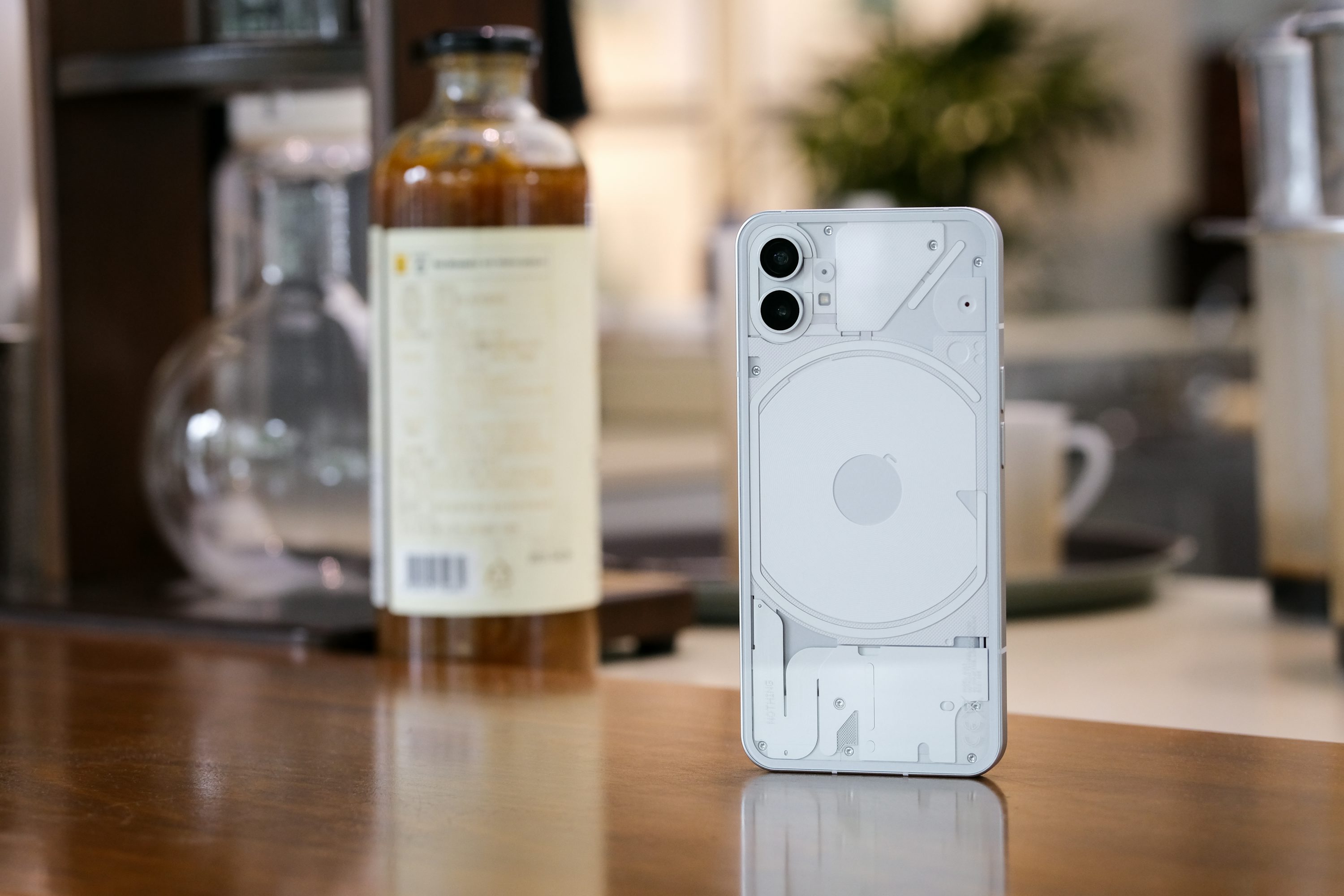
Nothing Phone (3a)
Pros
- $379 is the best price-to-performance ratio here
- 50MP telephoto with 2x optical zoom at this price is rare
- Glyph interface lights are genuinely useful, not just a gimmick
- 6.77-inch AMOLED with 3,000 nits peak brightness
- Clean software with fast updates from Nothing
Cons
- IP64 water resistance is the weakest here
- Snapdragon 7s Gen 3 is noticeably slower than flagships
- Camera struggles in low light compared to Pixel 9a
- Nothing's software ecosystem is still maturing
The Nothing Phone 3a is the most interesting phone on this list, and it's also the cheapest. At $379, it undercuts the Pixel 9a and Galaxy A56 by $120 while offering specs that have no business being at this price point.
The headline feature everyone talks about is the Glyph interface -- those LED strips on the transparent back that light up for notifications, timers, and charging status. I expected to dismiss them as a novelty. I didn't. Having my phone face-down on my desk and seeing a specific light pattern for different contacts means I check my phone less. I've set up distinct Glyph patterns for family, work, and everything else.
But the real story is the camera system. A 50MP telephoto with 2x optical zoom at $379? That's unheard of. Most phones at this price give you a depth sensor or macro lens and call it a triple camera. Nothing gave you an actual zoom lens. Daylight photos from the main 50MP sensor are sharp and well-exposed. The telephoto produces usable results for social media. Where it stumbles is low light -- the Snapdragon 7s Gen 3's image signal processor can't compete with Google's Tensor G4 when photons get scarce.
The 6.77-inch AMOLED display is bright (3,000 nits peak) and smooth at 120Hz. It's the largest screen in this comparison, and the bezels are reasonably thin.
The weakness is the IP64 rating. That's splash resistance, not submersion. Drop this in a pool and you're in trouble. Every other phone on this list has IP67 or IP68. If water resistance matters to you, that's a real gap.
For $379, though? I keep coming back to that number. This phone is $120 less than the Pixel 9a and gives you a bigger display, a telephoto lens, and a design that actually makes people ask "what phone is that?" I think it's the best value in phones right now.
OnePlus 13R: the performance monster
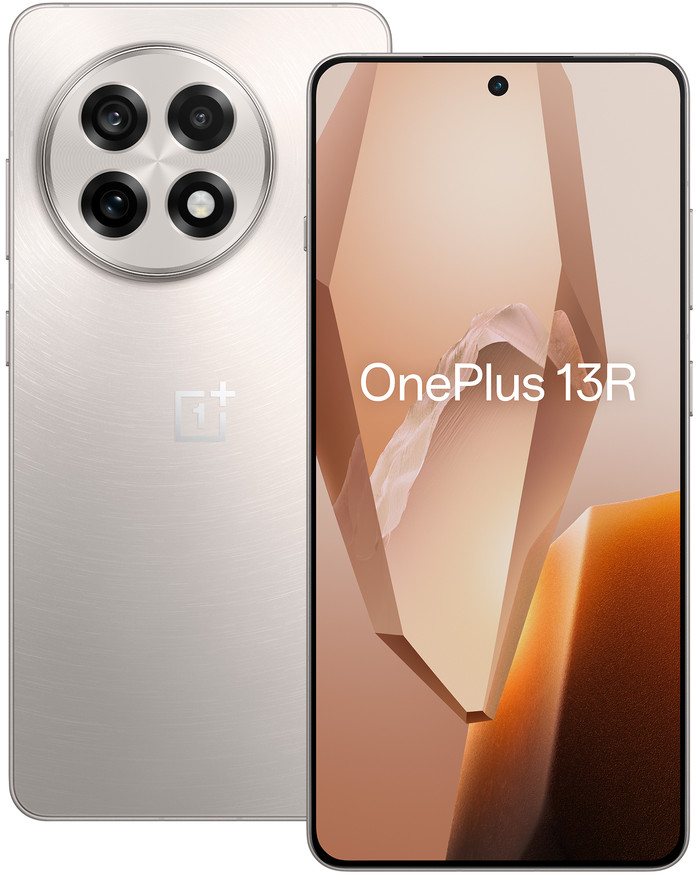
OnePlus 13R
Pros
- Snapdragon 8 Gen 3 is a genuine flagship chip
- 6,000mAh battery is the largest here by a wide margin
- 120Hz ProXDR display looks phenomenal
- 12GB RAM means you never run out of memory
- OxygenOS is clean and fast
Cons
- $600 pushes the definition of 'budget'
- Camera system is good but not class-leading
- IP65 is weaker water resistance than you'd expect at this price
- No wireless charging
I need to address this upfront: the OnePlus 13R costs $600, which is $100 more than most phones here. I'm including it because it regularly drops to $500 during sales, and the performance gap between this and everything else is massive.
The Snapdragon 8 Gen 3 is a proper flagship processor. This is the same chip in phones that cost $900+. Geekbench multi-core scores are roughly double the Galaxy A56's Exynos 1580. In real-world terms, that means Genshin Impact at 60fps with high settings, apps loading in half a second, and zero lag when multitasking between a dozen apps. If you're a mobile gamer or power user, nothing else here comes close.
The 6,000mAh battery is absurd. I averaged two full days between charges with moderate use. Heavy use still got me through a day and a half. Combined with 80W SUPERVOOC charging that goes from zero to 50% in about 20 minutes, battery anxiety just doesn't exist.
The display is a 6.78-inch 1.5K ProXDR panel that looks fantastic. Bright outdoors, deep blacks, smooth scrolling -- it matches or beats the Galaxy A56's display depending on the metric you care about.
Where the 13R compromises is the camera. The 50MP Sony LYT-700 main sensor takes good photos, and the 50MP telephoto is a nice addition, but the processing is merely adequate. OnePlus has improved over the years, but it's still behind Google and even Samsung in tricky lighting. Night mode is fine. Just fine.
The other oddity is IP65 instead of IP67 or IP68. At $600, I'd expect full submersion resistance. IP65 handles rain and splashes but not a dunk in the sink.
If performance and battery life are your priorities, the OnePlus 13R is the obvious choice. It's playing a different game than the rest of this list.
Motorola Edge 2025: the dark horse
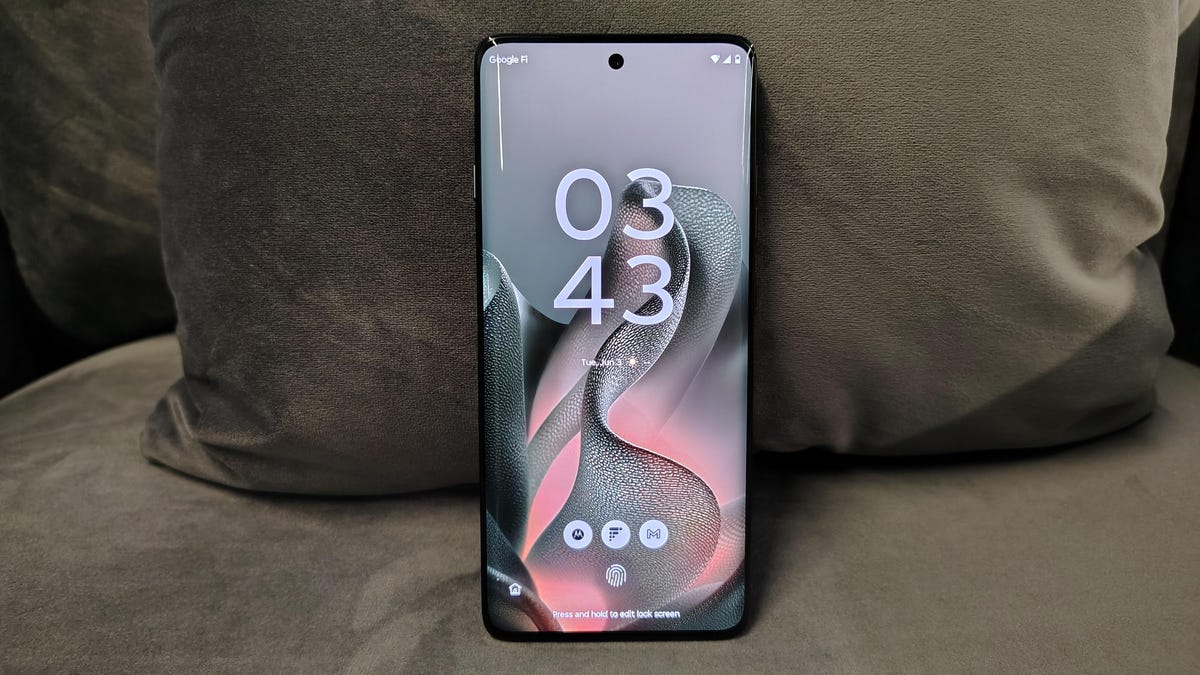
Motorola Edge (2025)
Pros
- IP68 AND IP69 water resistance is the best here
- Beautiful quad-curved design with vegan leather back
- Sony LYTIA camera system produces natural colors
- 5,200mAh battery with 68W fast charging option
- Two-day battery life claim actually holds up
Cons
- Dimensity 7400 Ultra is the weakest mainstream chip here
- Software update commitment is shorter than competitors
- Motorola's My UX skin feels dated compared to OxygenOS
- Camera autofocus can hunt in low light
- $550 is hard to justify against the OnePlus 13R
Motorola doesn't get enough credit. The Edge 2025 is a genuinely attractive phone -- that quad-curved pOLED display with the vegan leather back in Pantone Deep Forest is the most premium-feeling device in this lineup. It looks and feels like it costs $800. It doesn't.
The big selling point is durability. IP68 for standard water resistance, IP69 for high-temperature water jets, and MIL-STD-810H for drops and extreme conditions. If you work outdoors or just have a habit of dropping your phone in unfortunate places, the Motorola Edge 2025 is the safest choice by far.
Battery life is excellent. The 5,200mAh cell earned a DXOMARK Gold Label for battery performance, and in my testing, the two-day claim holds up with moderate usage. The optional 68W TurboPower charger (sold separately, annoying) can get you a day's worth of charge in about six minutes. That's not a typo.
The Sony LYTIA camera system produces photos with more natural, true-to-life colors compared to Samsung's oversaturation or Google's aggressive HDR. The 50MP ultrawide is useful. The 10MP telephoto gives you some optical zoom, though the reach isn't as impressive as the Nothing 3a's 50MP 2x setup.
Here's where it gets uncomfortable. The Dimensity 7400 Ultra chip handles everyday tasks but it's the least powerful processor here. Gaming performance is adequate at medium settings but noticeably behind the OnePlus 13R and even the Pixel 9a's Tensor G4 in sustained workloads. And Motorola's update commitment still trails Samsung's six years and Google's seven.
At $550, the Edge 2025 sits in an awkward spot. It's $50 less than the OnePlus 13R, which is faster and has a bigger battery. But if durability and design matter more than raw performance, the Edge rewards that trade-off.
How we chose these phones
We tested each phone as a daily driver for at least two weeks, swapping SIM cards and running the same tests across all five devices.
- Camera quality -- Shot the same scenes in daylight, low light, and mixed lighting. Compared processing, dynamic range, and color accuracy.
- Battery life -- Standardized screen-on time tests at 50% brightness with adaptive refresh rate enabled.
- Performance -- Geekbench, 3DMark, and real-world app loading times. Also tested sustained performance over 30-minute gaming sessions.
- Display quality -- Measured brightness, color accuracy, and refresh rate behavior in daily use.
- Build quality and durability -- IP ratings, drop test performance, and how each phone held up after two weeks of pocket carry without a case.
- Software experience -- Update commitments, bloatware levels, UI responsiveness, and how much each skin gets in the way.
Who should buy what
You want the best photos under $500? Google Pixel 9a. The camera processing is unmatched at this price. Seven years of updates means this phone will age well.
You want the biggest, best-looking screen? Samsung Galaxy A56. That 6.7-inch Super AMOLED is the best display here, and the Samsung ecosystem is hard to beat for accessories and smartwatch pairing.
You want the most phone for the least money? Nothing Phone 3a at $379. A telephoto lens, 120Hz AMOLED, and distinctive design for $120 less than the Pixel or Samsung. The value is absurd.
You're a gamer or power user? OnePlus 13R. The Snapdragon 8 Gen 3 and 6,000mAh battery make everything else feel underpowered. Wait for a sale to get it closer to $500.
You need a phone that can survive anything? Motorola Edge 2025. IP68/IP69, military-grade construction, and a two-day battery. Built for people who are hard on their phones.
Honestly, there are no bad choices here. The worst phone on this list would have been the best budget phone five years ago. Pick based on what matters most to you. In 2026, they're all pretty damn good.
As an Amazon Associate, we earn from qualifying purchases. This doesn't affect our recommendations or editorial independence.